
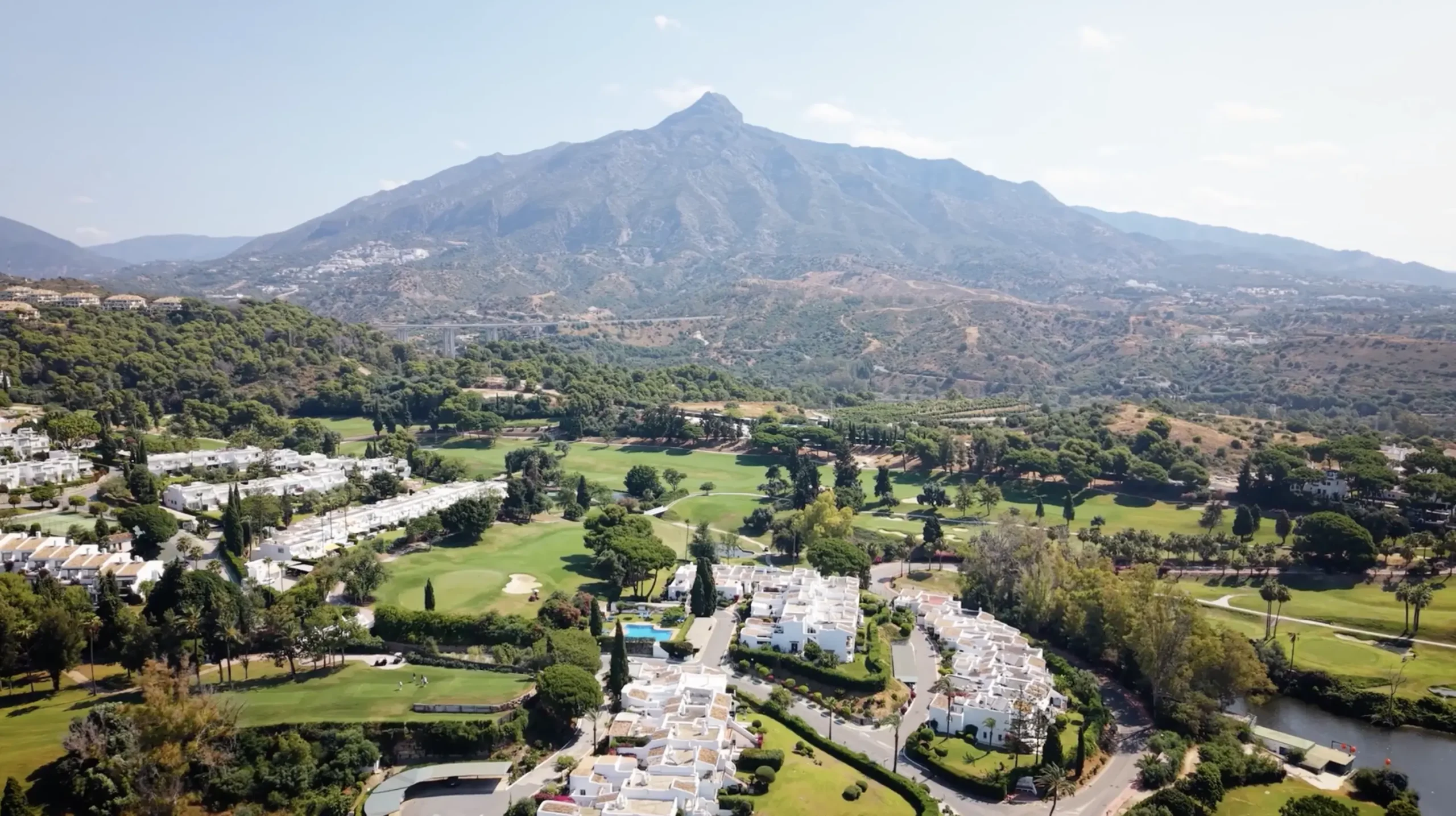
After four decades, Marbella has a new rulebook for urban planning, the PGOM. Here is what it is, what has changed, what still needs to happen and why the next stage matters most for anyone who owns, or hopes to own, a home here.
What is the PGOM?
Every plot in Marbella, whether it’s a beachfront villa or an undeveloped hillside, is governed by a plan that determines its designated use, the PGOM. This plan specifies if the land can be developed, the type of buildings allowed, where roads and schools will be located and which areas are protected as green spaces.
PGOM, or Plan General de Ordenación Municipal, is the General Municipal Planning Plan. According to the Town Hall, it serves as a comprehensive planning tool that defines the municipality’s overall organisation and strategic planning, while also classifying land and regulating land uses in rural areas.
The importance for homeowners is clear. A property’s underlying planning framework influences its permissible uses and ultimately affects its future potential and value.
The update: a new chapter for Marbella
On 18 September 2026, Marbella gave final approval to its PGOM, the first in Andalucía adapted to the region’s land sustainability law, known as LISTA. It marks an important change for a city that, until now, had been governed by a plan approved in 1986. The vote passed with support from the governing PP, OSP and VOX, while the PSOE abstained.
This moment has been long overdue. The Town Hall itself describes the 1986 plan, approved on 3 June that year, as a complex and outdated document whose validity has been interrupted over time. A second public consultation on the new plan, during which residents could submit formal objections, ran from June to August 2024. Finally, in February 2026, Andalucía’s regional housing and planning department issued a favourable report on the final document and sent its opinion to the Town Hall, clearing the way for the council to approve it in full session.
Mayor Ángeles Muñoz described the approval as the start of a new era and called the document a plan for the city, created by and for Marbella.
What changes in the new plan
More urban land, with a clear framework. The plan covers 53 million square metres of urban land, compared with roughly 40 million under the previous plan and provides for new developments, public housing, infrastructure, amenities, green spaces and areas for economic activity.
A commitment to affordable housing
New projects are linked to the creation of protected and price-capped homes, and actions on urban land will reserve 20 per cent of buildable area for affordable housing.
Legal certainty for legacy properties
This is perhaps the most significant point for many owners. Around 18,000 homes had fallen outside regular planning status as a result of Marbella’s complicated planning history. The Mayor described the new framework as a guarantee for good-faith third parties and the families connected to those homes, providing a regulatory basis to continue addressing their situations.
Infrastructure and mobility
According to the Councillor for Urban Planning, José Eduardo Díaz, the plan reserves space for future mobility infrastructure, including a rail connection. It also proposes new road links, more cycle routes and parking, and ties urban growth to the availability of water, sanitation and energy supply.
A greener, more connected city
The plan aims to enhance the connection between the mountains and the coast by creating natural corridors and open spaces, all while preserving environmental and landscape qualities.
Before final confirmation: the two-month window
Council approval is a landmark, but it is not the final word. Like any general planning instrument in Spain, the PGOM can still be challenged before the courts through what is known as a recurso contencioso-administrativo, an administrative law appeal.
According to Spain’s administrative-court law, the two-month deadline to file such an appeal begins the day after the challenged provision is published, not from the September council vote. The timing is crucial as the countdown starts only once the plan is officially published in the bulletin.
In practical terms, this means there is still a period during which a party with a legitimate interest could challenge the plan. Once that window closes without a successful challenge, owners, buyers and developers can place greater confidence in the new framework. We will be following this closely and will share an update as soon as the period has passed.
The POU: the real game-changer for property
If the PGOM is the master plan, the POU is where the rules become much more specific. For anyone involved in real estate, it is the document to watch.
Under the new regional law, Marbella moves from a single municipal plan to two: the PGOM and the Plan de Ordenación Urbana (POU). The Town Hall describes the POU as a detailed planning tool that analyses, diagnoses and organises the current city layout to enhance it. It governs land and building usage in Marbella and establishes the guidelines that define the urban environment.
This is why it matters so much. The PGOM sets the direction for the whole municipality. The POU gets down to street and plot level, including what can be built, what the building can be used for and the parameters any renovation or new construction must respect. Those details shape a property’s potential and, with it, its value. The PGOM’s regulations also anticipate that the POU may adjust how urban land is classified, so the detail is still to be finalised.
For owners of homes affected by Marbella’s planning history, the POU is likely to be where much of the practical resolution takes place, as the PGOM’s general guarantees are translated into specific rules. For buyers, it should provide a much clearer picture of exactly what they are buying into. For developers and investors, it will define what is achievable plot by plot.
The Town Hall’s vision is a city of neighbourhoods that improves residents’ lives by meeting their everyday needs. The POU is currently being processed and its approval will clarify much of the detail behind Marbella’s new planning framework. As Councillor Díaz stressed, final approval of the PGOM is not the end of the process, but the starting point for putting its provisions into practice.
Frequently asked questions
1. Does the new PGOM replace the 1986 plan entirely?
It replaces the previous plan at a strategic level. The new PGOM overrides the 1986 plan in its overall planning provisions and establishes a territorial model consistent with current planning laws. Specific plot-level rules will be provided later with the POU.
2. I own a home that was affected by Marbella’s past planning irregularities. Does this help me?
It is a meaningful step forward, although it does not automatically resolve the status of every affected property. The Town Hall has described the new framework as a guarantee for good-faith owners of the roughly 18,000 affected homes. It provides a legal foundation for addressing individual situations. Each property is different, so we always recommend independent legal advice specific to your home.
3. Can I rely on the PGOM for the exact rules on my plot?
This is not yet applicable in all cases. The PGOM provides the overall framework, while the specific rules for urban land will be outlined in the POU, which is still in development.
4. Why is Marbella’s plan significant beyond the city itself?
It is the first municipal plan in Andalucía adapted to LISTA, the region’s modern planning law. This puts Marbella at the forefront of the region’s new planning system.
5. Where can I see the official documents?
The Town Hall makes the plan and its supporting documents available on its dedicated planning portal, nuevoplan.marbella.es. Additionally, the urban planning department at urbanismo.marbella.es is a helpful resource. The plan officially takes effect once it is officially published, so it’s advisable to regularly check the portal for the most recent updates.
6. When does the two-month challenge period begin and end?
It begins the day after the plan is officially published, not on the date of the council vote. The exact end date will therefore depend on when publication takes place. We will confirm the timeline once the plan has been published.
7. When will the POU be approved?
The Town Hall has confirmed that the POU is currently being processed. No official approval date has been announced, so we would treat any specific timeline with caution until the Town Hall confirms one.
Our perspective
For a city with a sometimes complicated planning history, this marks a truly positive development. However, property owners and buyers should see it as just a part of the ongoing story. The upcoming months, including the challenge period and the progression of the POU, are expected to clarify many details that are important at the individual property level.
Whether you currently own property on the Costa del Sol or are considering your next purchase, our team can help you navigate what the new plan means for you. Get in touch to find out more.