
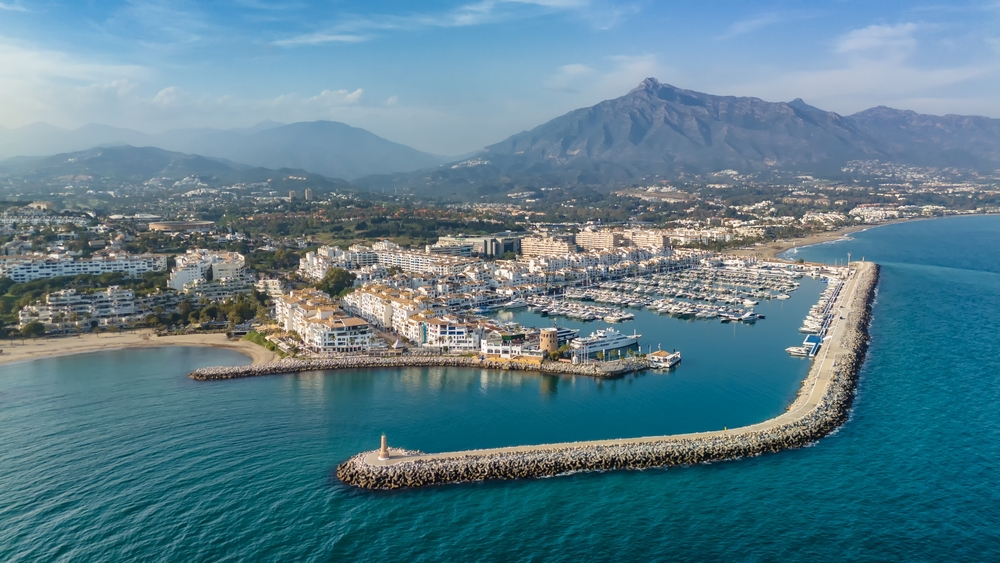
The Costa del Sol has long held strong appeal for international buyers, but the scale and diversity of foreign demand in recent years has become particularly striking. Across Spain, overseas buyers accounted for roughly 20% of all property transactions in 2025, a historic high, yet in Málaga province, their presence is even more pronounced. In some of the region’s most established markets, such as Marbella and Benahavís, international purchasers account for well over half of all transactions.
For anyone active in the real estate sector here, these statistics simply confirm what agents and developers experience daily. The Costa del Sol is not just a Spanish property market with occasional foreign interest. It is fundamentally an international marketplace where buyer profiles, motivations and nationalities shape demand.
Understanding which nationalities are most active is therefore essential, both for interpreting current trends and anticipating where future demand may emerge.
British buyers remain firmly in first place
Despite political changes, currency fluctuations and ongoing discussions about taxation and residency rules, British buyers remain the single largest group of property buyers in Spain and on the Costa del Sol. Recent data shows that UK nationals accounted for nearly 8% of all foreign property purchases in Spain in 2025, maintaining their long-standing position at the top of the rankings.
On the Costa del Sol specifically, the British presence is even more pronounced. In Málaga province, they continue to represent the largest single nationality of international buyers, particularly in areas such as the Golden Triangle of Marbella, Benahavis and Estepona, as well as Mijas Costa and Manilva.
The motivations behind British purchases tend to fall into three clear categories. First are traditional second-home buyers seeking a reliable escape from northern European winters. Second are retirees relocating permanently for lifestyle reasons. Increasingly, however, a third group has become important: professionals and entrepreneurs relocating with families, often drawn by international schools, infrastructure and the ability to work remotely.
This shift has gradually lowered the average age of international buyers and contributed to a more year-round residential market rather than one driven purely by holiday homes.
Northern European buyers continue to dominate
Beyond the British market, Northern European buyers remain a defining force across the Costa del Sol. German, Dutch and Belgian buyers are consistently among the most active nationalities, together accounting for a substantial share of international demand.
German buyers in particular have long been drawn to Spain’s Mediterranean coast. The strong German economy, combined with a cultural affinity for holidays in the southern European sunshine and second homes abroad, has created a steady stream of buyers over several decades. In recent years, improved flight connectivity and the region’s growing reputation for high-quality infrastructure have further strengthened that interest.
Dutch demand has also expanded rapidly. Reports indicate significant year-on-year growth in purchases by buyers from the Netherlands, reflecting both rising wealth and the growing appeal of Spain as a relocation destination for younger professionals.
Belgian buyers form another important segment of the market. Although smaller in absolute numbers than British or German buyers, they are often active in the mid-to-high end of the market and frequently seek modern new-build properties or well-located apartments close to amenities.
French and Scandinavian buyers remain influential
French buyers are another significant nationality group purchasing property along the Costa del Sol. While France has traditionally been more associated with property purchases in northern Spain, the Mediterranean coast continues to attract French buyers seeking second homes in warmer climates.
Scandinavian buyers, particularly from Sweden, also maintain a strong presence. Swedish buyers rank among the top nationalities purchasing property across several Costa del Sol municipalities.
Historically, Scandinavian demand has been closely linked to lifestyle considerations. Many buyers seek winter homes or long-term seasonal residences that allow them to spend extended periods in Spain while maintaining ties to their home countries. The high quality of healthcare, excellent transport links and well-established amenities for Scandinavian communities in parts of the Costa del Sol have reinforced this trend.
A more diverse international market is emerging
While traditional northern European markets remain dominant, the Costa del Sol’s buyer profile is gradually diversifying. Buyers from Italy, Poland, Switzerland and Morocco are becoming increasingly visible in transaction data, reflecting broader international interest in Spanish property.
At the upper end of the market, American buyers are also gaining attention. Although they represent a smaller share of transactions overall, they tend to gravitate towards higher-value properties and pay some of the highest average prices per square metre in Spain.
Latin American buyers, particularly those with family or cultural links to Spain, are another emerging group within the luxury segment. Political and economic uncertainty in some parts of the Americas has encouraged wealth relocation to European property markets, with Marbella frequently appearing on the shortlist.
Why the Costa del Sol continues to attract international buyers
The sustained diversity of nationalities purchasing property here is not accidental. Several structural factors continue to underpin the Costa del Sol’s global appeal.
Firstly, the region offers an established lifestyle infrastructure that few Mediterranean destinations can match. International schools, private healthcare, modern transport connections and an extensive hospitality sector allow buyers to relocate without sacrificing convenience.
Secondly, property values, while rising steadily, remain comparatively competitive when measured against other major European coastal destinations such as the French Riviera or parts of Italy.
Finally, the Costa del Sol has evolved beyond its historic reputation as a purely holiday destination. Increasing numbers of buyers now purchase property as a primary residence or semi-permanent base rather than simply a seasonal retreat.
For estate agencies operating in the region, these nationality trends are more than statistics. They shape marketing strategies, property design, development planning and even community infrastructure.
The Costa del Sol has always been international, but the composition of its buyers continues to evolve. For sellers and developers, this diversity represents opportunity. For buyers, it confirms something many already recognise: the Costa del Sol is not simply a place people visit. It is increasingly a place people choose to live.
Considering a property on the Costa del Sol?
Whether you are searching for a permanent home, a second residence or a strategic investment, understanding the dynamics of this international market is essential.
At Kore Estates, we specialise in guiding buyers through Marbella, Benahavís and Estepona, providing informed advice on location, property quality and long-term value. If you are considering a move to the Costa del Sol or exploring investment opportunities, speak with our team today and discover how the right property decision begins with the right guidance.