
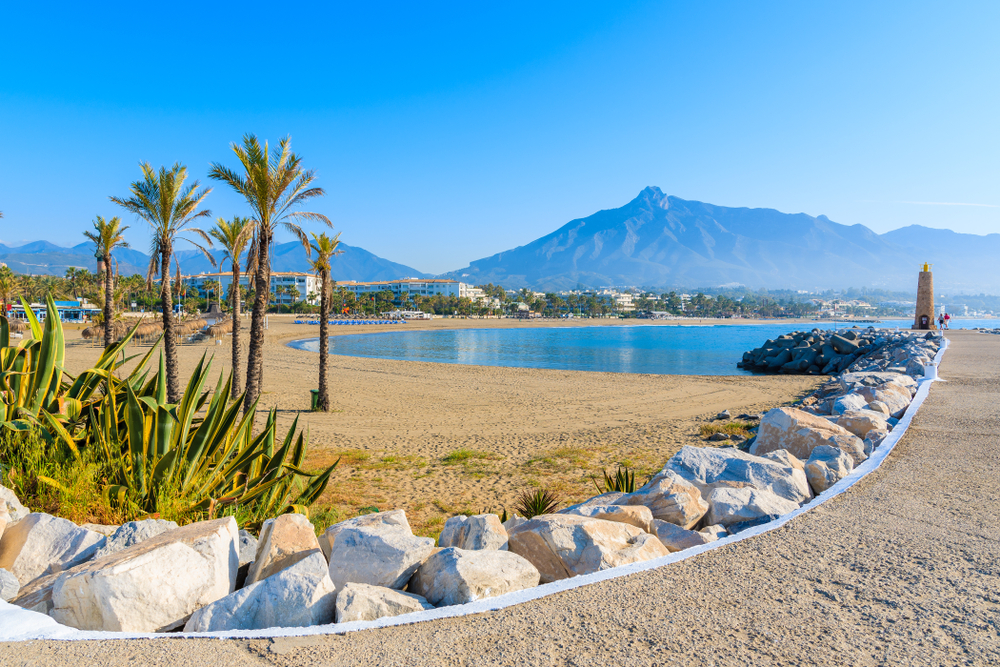
The profile of the international buyer on the Costa del Sol is evolving. While traditional markets such as the UK, Germany and Scandinavia remain highly active, a new wave of demand is emerging from Eastern Europe. Among these, Romanian buyers stand out as one of the fastest-growing and increasingly influential groups in Marbella and the surrounding areas.
This is part of a long-term change, reflecting wider economic, social, and lifestyle shifts that are transforming who buys property in southern Spain.
A market already driven by international demand
To understand the rise of Romanian interest in this area, it is important to first recognise the structure of the market they are entering.
Spain continues to attract strong international interest, with foreign buyers accounting for nearly 97,300 property purchases in 2025, representing around 13.8% of all transactions nationwide.
On the Costa del Sol, that influence is far more pronounced. International buyers account for approximately 32.4% of all property transactions, and in prime areas such as Marbella, this rises to over 60%.
This creates a highly competitive and globally influenced market, where emerging buyer groups can quickly gain visibility and impact.
Romania’s growing presence in the Spanish property market
Romanian buyers are not entirely new to Spain. They have been steadily present in the broader market for years, ranking among the top foreign nationalities purchasing property.
However, what has changed is the pace of growth and the type of property being acquired. Increasingly, Romanian buyers are moving beyond entry-level purchases and into higher-value sectors.
In parallel, the Romanian economy has seen consistent growth over the past decade, with rising disposable income and an expanding professional class. This has translated into greater purchasing power and a willingness to invest internationally.
The Costa del Sol, and Marbella in particular, offers a natural next step. It combines lifestyle, accessibility and investment potential in a way that few European destinations can match.
Why the Costa del Sol resonates with Romanian buyers
The appeal is not based on a single factor, but on a combination of practical and lifestyle considerations.
Climate plays a role, but it is not the defining one. For many Romanian buyers, the key attraction is the balance between quality of life and accessibility. Spain offers a familiar European framework, with strong infrastructure, healthcare and education systems, while providing a markedly different day-to-day experience.
There is also a cultural alignment that should not be overlooked. Romanian buyers tend to value family life, social connection and long-term stability. The Costa del Sol supports this, offering international schools, established residential communities and a safe, well-serviced environment.
At the same time, the region offers a lifestyle that feels aspirational yet attainable. Outdoor living, year-round activity and a strong social scene are all part of the draw, particularly for buyers looking beyond purely financial returns.
A shift towards long-term ownership
One of the defining characteristics of Romanian buyers is their approach to property ownership.
Rather than viewing real estate purely as a short-term investment, many are focused on long-term value. This includes second homes with future relocation in mind, as well as properties intended for extended family use.
This aligns closely with broader trends across the Costa del Sol, where buyers are increasingly purchasing with lifestyle in mind. The distinction between investment and personal use is becoming less rigid, with many properties serving both purposes.
For the market, this is a stabilising factor. Long-term ownership supports consistent demand and reduces volatility, particularly in prime areas such as Marbella and Benahavís.
Integration into an established international community
Another factor driving Romanian demand is the ease of integration.
Marbella is not a new or emerging destination. It is a mature, international environment where buyers from multiple countries live side by side. The presence of residents from over 150 nationalities reinforces this position as a truly global hub.
For Romanian buyers, this removes much of the uncertainty associated with purchasing abroad. There are existing networks, services and communities that make the transition straightforward.
In many cases, this also includes informal support structures. Recommendations, introductions and shared experiences play a significant role in shaping buying decisions and accelerating the growth of this particular buyer group.
Investment logic alongside lifestyle appeal
While lifestyle is a primary motivator, investment considerations remain important.
The Costa del Sol continues to demonstrate strong fundamentals. Limited supply of new-build property, particularly in prime locations, combined with sustained international demand, supports long-term value growth.
For Romanian buyers, this creates a compelling proposition. Property can be enjoyed personally while also functioning as a secure asset within a stable European market.
Rental potential further strengthens this position. With year-round demand driven by tourism, remote working and relocation, well-located properties can generate consistent income when not in use.
A younger and more dynamic buyer profile
Another notable shift is the demographic profile of Romanian buyers.
Unlike some traditional markets, which are often dominated by retirees, Romanian purchasers tend to be younger and more professionally active. Many are entrepreneurs, executives or individuals working within international industries.
This aligns with the broader evolution of Marbella itself. The area is no longer defined solely by leisure or retirement. It has become a base for remote working, business activity and long-term living.
The presence of co-working spaces, modern office environments and networking opportunities supports this transition, making it possible to combine professional life with the lifestyle advantages of the Costa del Sol.
What this means for the market
The increase in Romanian buyers reflects a broader diversification of demand.
No single nationality dominates the Costa del Sol in the way that British buyers once did. Instead, the market is becoming more balanced, with interest coming from across Europe and beyond.
This diversity strengthens the market. It reduces reliance on any one buyer group and creates a more resilient demand base. It also contributes to the cosmopolitan character that defines Marbella today.
For developers and agents, it reinforces the importance of delivering property that appeals to an international audience. Quality, design and functionality take precedence over purely local considerations.
The outlook
Romanian buyers are unlikely to remain a niche segment for long. Their presence is growing, their purchasing power is increasing and their motivations align closely with the direction of the Costa del Sol market.
As Spain continues to attract international real estate investment, emerging buyer groups such as this will play an increasingly important role in shaping demand.
For those already active in the market, this represents an opportunity to engage with a dynamic and expanding audience. For new buyers, it highlights the importance of acting within a market that is becoming more competitive and globally connected.
If you are considering purchasing on the Costa del Sol, understanding who else is entering the market and why is essential. Speak to the team at Kore Estates for informed guidance on current trends, emerging buyer profiles and the opportunities available across Marbella, Benahavís and Estepona.