
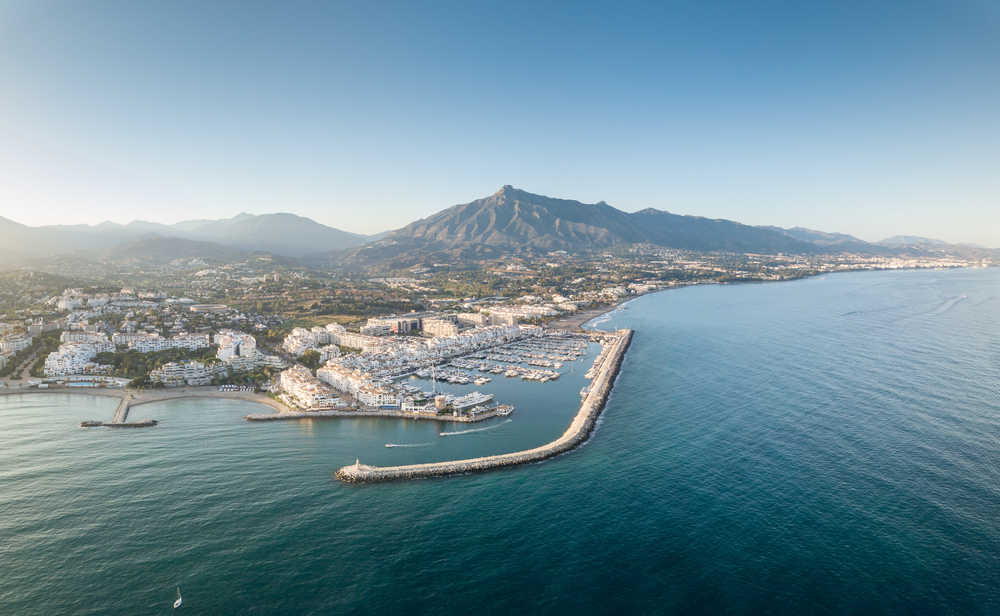
Spain has moved into first position as Europe’s leading destination for real estate investment, according to CBRE, one of the world’s largest and most established real estate advisory companies. Their latest data places Spain ahead of traditionally dominant markets, with investment volumes exceeding €14 billion in 2025 and a marked increase in international capital allocation towards the country. For buyers here, this reflects a deeper shift in how international capital views Spain, and more specifically, how markets such as Marbella are evolving in response.
Such a level of investment does not exist in isolation. It shapes the environment buyers enter, influencing factors such as property type, quality, long-term value, infrastructure, lifestyle and the overall experience of living in the area.
A market defined by confidence
When a country becomes the primary target for real estate capital, it signals confidence. Investors, whether institutional or private, are drawn to stability, growth potential and global appeal. Spain currently offers all three, reinforced by the fact that CBRE identifies it as the top-ranked destination for cross-border real estate investment in Europe.
On the Costa del Sol, this is particularly evident. Marbella has transitioned from a seasonal destination into a year-round residential hub. Demand is no longer driven purely by holiday buyers or retirees. Instead, it is supported by international residents, remote professionals, entrepreneurs and families relocating for lifestyle reasons.
This creates a market that is active, resilient and increasingly sophisticated. New developments reflect this shift, focusing on design, sustainability and long-term usability rather than short-term appeal. For buyers, it means access to property that aligns with modern expectations and future demand.
What this means for property values
Sustained investment typically brings upward pressure on prices, but more importantly, it brings structure. Markets with strong capital inflows tend to mature, with clearer segmentation between entry-level, mid-market and prime property.
In Marbella, this has led to a steady strengthening of the €500,000 to €2 million bracket, where many international buyers operate. Properties are no longer valued purely on location but on a combination of factors, including build quality, amenities, energy efficiency, and community design.
This creates both opportunity and responsibility. The opportunity lies in entering a market supported by long-term demand. The responsibility is in making informed decisions, as the gap between well-positioned properties and less competitive stock continues to widen.
A genuinely international community
One of the most immediate effects of sustained international investment is the diversity of the resident community. Marbella has long attracted buyers from across Europe, but the profile has expanded significantly.
Today, it is common to find residents from Scandinavia, the UK, Germany, the Netherlands, the Middle East and increasingly North America, all living within the same developments and neighbourhoods. This creates an environment that feels open, connected and easy to integrate into.
For new buyers, this matters more than it might first appear. Relocating or purchasing a second home becomes less about starting from scratch and more about stepping into an existing network. There are established social circles, international schools, business communities and leisure groups already in place.
The result is a cosmopolitan atmosphere that feels natural rather than constructed. People arrive from different backgrounds, but share a similar outlook. They are drawn by lifestyle, climate and quality of life, which creates a level of cohesion that is often missing in more transient markets.
Infrastructure follows investment
Where capital flows, infrastructure tends to follow. This is one of the most significant yet often-overlooked benefits of strong real estate investing. CBRE highlights that increased institutional investment is closely linked to urban development, regeneration projects and improvements in transport and services, all of which are visible across southern Spain.
Across the Costa del Sol, improvements in healthcare, education and transport have accelerated in recent years. Marbella and its surrounding areas now offer access to world-class public and private hospitals, international schools and well-maintained road networks connecting key locations.
Air connectivity is another critical factor. Málaga-Costa del Sol Airport continues to expand its routes, linking the region to major cities across Europe and beyond. This ease of access reinforces both lifestyle appeal and property demand, creating a cycle that supports long-term growth.
This translates into practical advantages. Living in Marbella is no longer about compromise. It is possible to enjoy a relaxed coastal environment while maintaining access to the services and facilities expected of a major international destination.
Lifestyle as a central driver
Investment may underpin the market, but lifestyle remains the primary reason people choose Marbella. What has changed is the level at which that lifestyle is delivered.
Modern developments increasingly function as self-contained communities. Residents have access to gyms, wellness spaces, co-working areas and social zones, all within their immediate environment. This reflects a broader shift towards convenience and quality of life.
Beyond individual developments, the wider area offers a range of amenities that continue to grow. From golf courses and beach clubs to restaurants, cultural events and outdoor activities, the region supports a wide range of interests.
What stands out is the consistency. This is not a destination that comes to life for a few months of the year. It operates throughout all seasons, with a pace of life that appeals to both full-time residents and second-home owners.
A growing hub for business and remote working
This notable shift in the number of people choosing to base their working lives in Marbella is testimony to the destination’s status as a robust and growing international business hub.
This is reflected in the rise of high-quality office environments and co-working spaces across the area. Modern developments increasingly incorporate dedicated workspaces, meeting rooms and business lounges, while established hubs offer flexible offices designed for entrepreneurs, remote professionals and international companies. CBRE also notes an increasing demand for flexible workspace across Spain, driven by international businesses and remote-working trends, further reinforcing this shift.
Alongside this, a growing calendar of networking events, industry meet-ups and business forums has emerged. These range from informal gatherings to more structured events, allowing residents to build connections quickly and operate within an active professional network.
Purchasing property in Marbella is no longer about stepping away from work. It is about integrating work into a setting that supports both professional activity and quality of life. The ability to live and work effectively in the same place adds another layer of long-term appeal, reinforcing the area’s position as more than a destination, but a home.
Long-term outlook
Spain’s position as Europe’s leading real estate investment destination is unlikely to be short-lived. The fundamentals underpinning this growth, combined with the continued capital inflows point to sustained market strength rather than a short-term surge.
For buyers in Marbella, this translates into a market that is not only active today but also positioned for continued relevance. Investment brings visibility and visibility attracts further demand. The result is a dynamic environment where quality property continues to perform and where lifestyle and investment potential increasingly go hand in hand.
If you are considering purchasing in Marbella, understanding how this wider investment landscape influences the market is essential. Speak to the team at Kore Estates for clear, informed guidance and access to properties that reflect both current demand and long-term value.